Frequently Asked Questions
Cancer is a group of more than 100 different diseases characterized by abnormal cell growth that may invade nearby tissue in any area of the body.1
Benign refers to a noncancerous tumor that does not usually invade nearby tissue or spread to other parts of the body.1
Metastasis is the spread of cancer from the place in the body where the cancer began to other areas or organs in the body.1
Precancerous refers to cells in the body that could become cancerous.1 Another term for precancerous is pre-malignant.1
Information on cancer prevention is constantly evolving, but research suggests that certain healthy lifestyle choices can help to prevent cancer, including2:

Eating a healthy diet
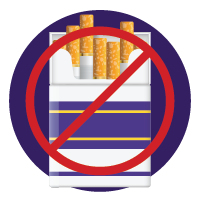
Not using tobacco products
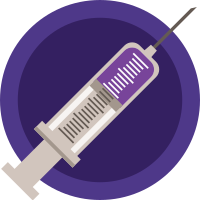
Getting vaccinated against HPV and hepatitis B

Maintaining a healthy weight and being physically active
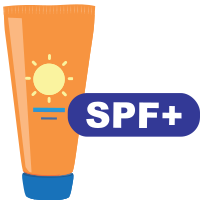
Protecting your skin from the sun by using a sunscreen with a high SPF number and wearing protective clothing

Getting regular health exams
A new diagnosis of cancer requires time to adjust, absorb and understand the diagnosis and what the treatment options are.3 It is normal to feel fear, anger, and/or shock.3 Learning about the cancer and the treatment options can help provide a sense of control over what’s happening.3
Radiation therapy is a type of cancer therapy that involves strong beams of energy to target cancer cells.3 Radiation therapy may include3:
- External radiation: a machine is used to focus high-energy rays directly at the tumor. This type of radiation therapy is delivered for many weeks
- Internal radiation: a radioactive source is implanted inside the body and into or close to the tumor
- Systemic radiation: radioactive drugs that are either swallowed or injected, traveling through the body to treat cancer
Chemotherapy is a type of cancer treatment that is most often given by mouth or intravenously. It is common for more than one type of chemotherapy to be prescribed.3 Chemotherapy travels through the bloodstream, effectively treating cancers that have spread to other areas of the body.3 This treatment can be used to cure cancer, stop the cancer from spreading, slow the growth of cancer, lessen symptoms caused by cancer and decrease tumor size before surgery is performed to remove a tumor.3
References
- Cancer.net. Cancer Glossary: Definitions & Phonetic Pronunciations. https://www.cancer.net/navigating-cancer-care/cancer-basics/cancer-terms
- Mayo Clinic. Cancer prevention: 7 Tips to reduce your risk. November 23, 2024 https://www.mayoclinic.org/healthy-lifestyle/adult-health/in-depth/cancer-prevention/art-20044816
- American Cancer Society. After diagnosis: A Guide for People With Cancer and Their Loved Ones. https://www.cancer.org/content/dam/cancer-org/cancer-control/en/booklets-flyers/after-diagnosis-a-guide-for-patients-and-families.pdf
ALL URLs accessed April 6, 2026